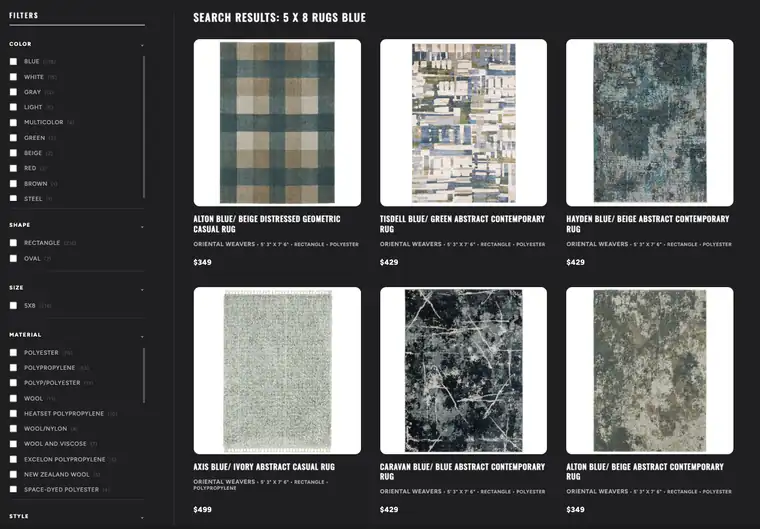
Understand combined intent
Handle multi-attribute requests instead of forcing shoppers through disconnected filters and generic keyword matching.
Discovery-AI combines product search, relevant recommendations, guided discovery, visual context, and conversational shopping assistance for large visual catalogs across rug and furniture retail.
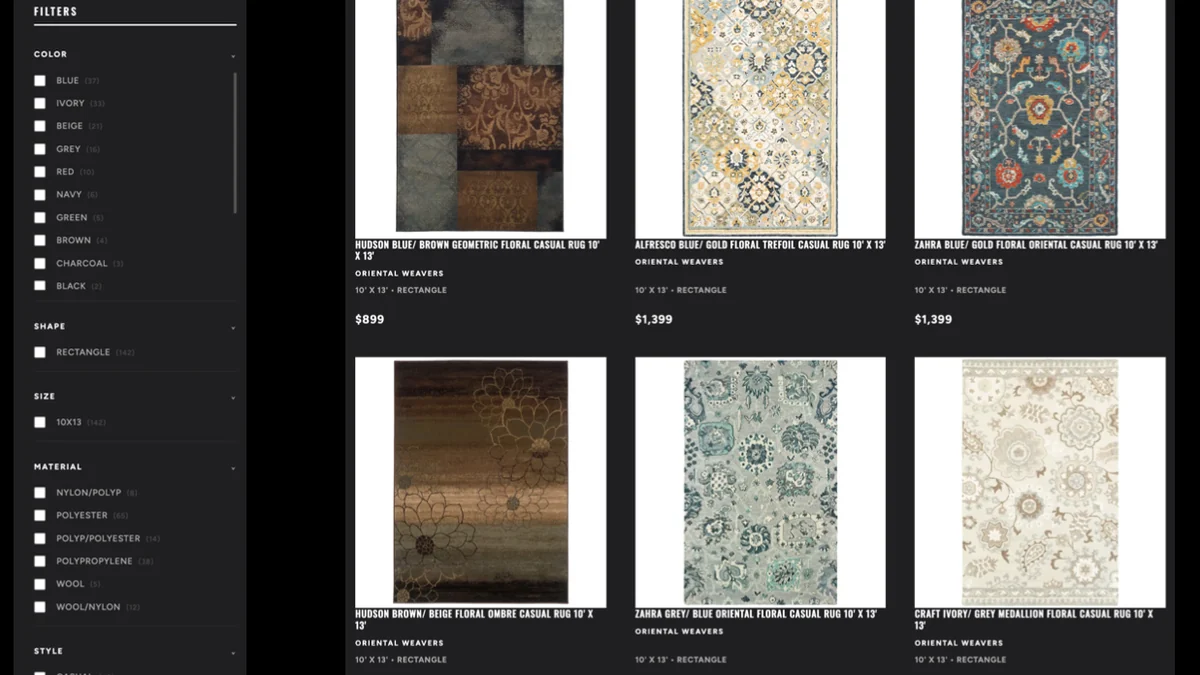
Size, shape, color, style, material, pattern, room context, visualization, and one-of-a-kind inventory create a demanding discovery problem that benefits from deeper product understanding.
Explore rug retail →Furniture retailLarge furniture catalogs add dimensions, materials, finishes, colors, collections, related pieces, and visual style signals that fit the same product-discovery foundation.
Explore furniture retail →Search should connect customer intent with the right product attributes and available variants—not simply match keywords. In rugs, that includes size, shape, color, style, material, pattern, room, use case, and budget. Furniture adds product type, dimensions, finish, material, collection, and room context.
Handle multi-attribute requests instead of forcing shoppers through disconnected filters and generic keyword matching.
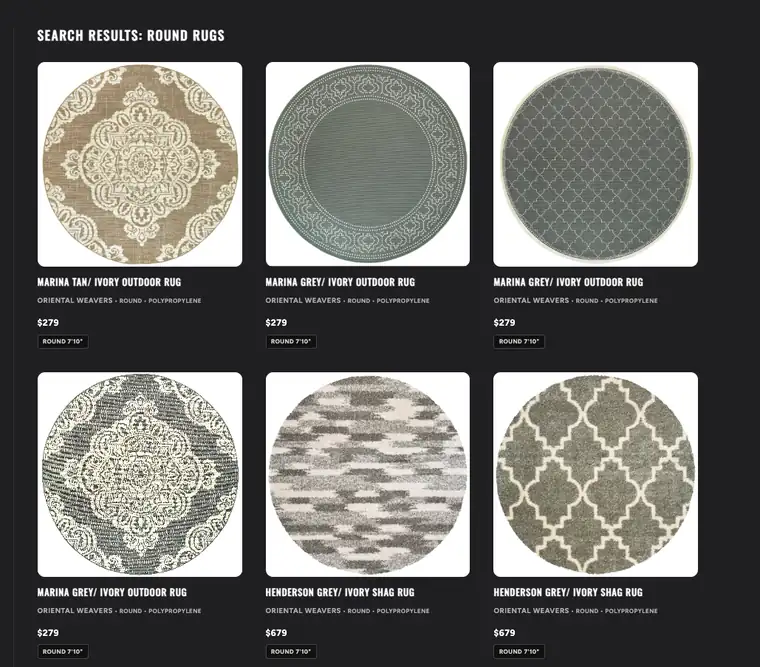
Show compatible shapes, sizes, finishes, imagery, availability, and prices instead of sending shoppers to dead ends.
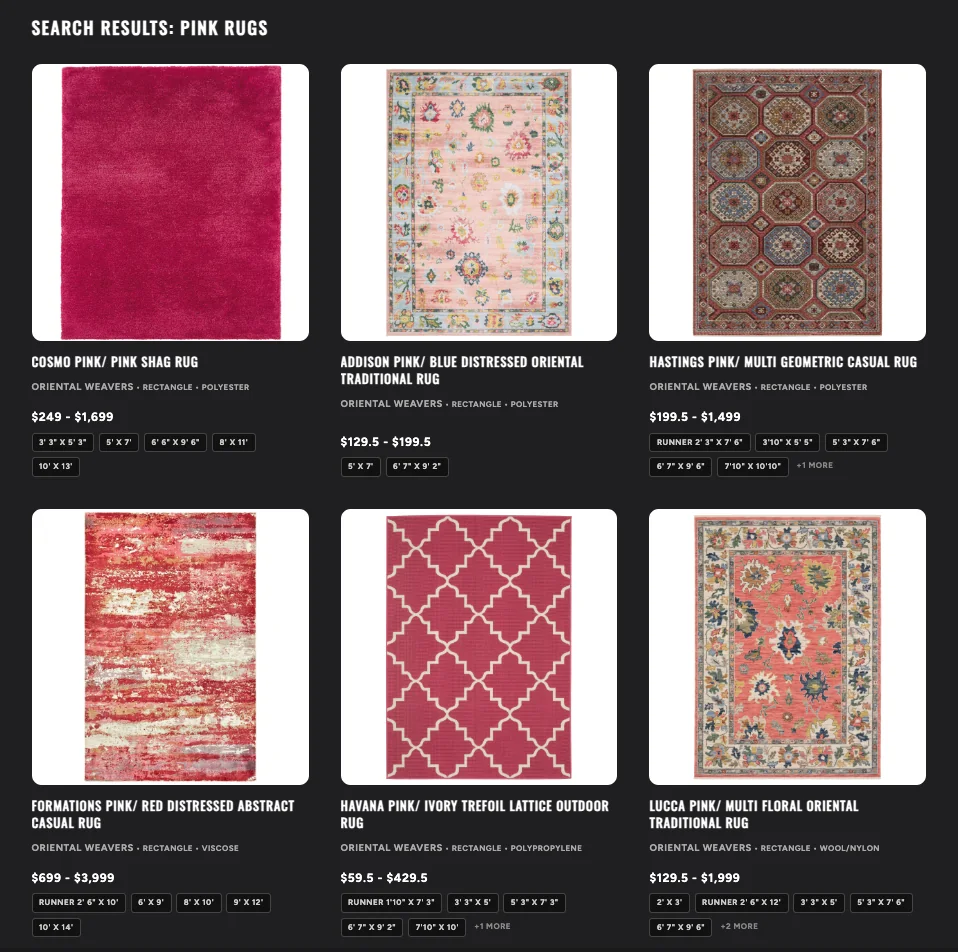
Present the best matching product, image, attributes, brand, material, and price where the catalog supports it.
Recommendations should give the shopper meaningful alternatives—not simply more products. Discovery-AI combines visual similarity, product attributes, variant compatibility, catalog relationships, product context, and shopper engagement signals.
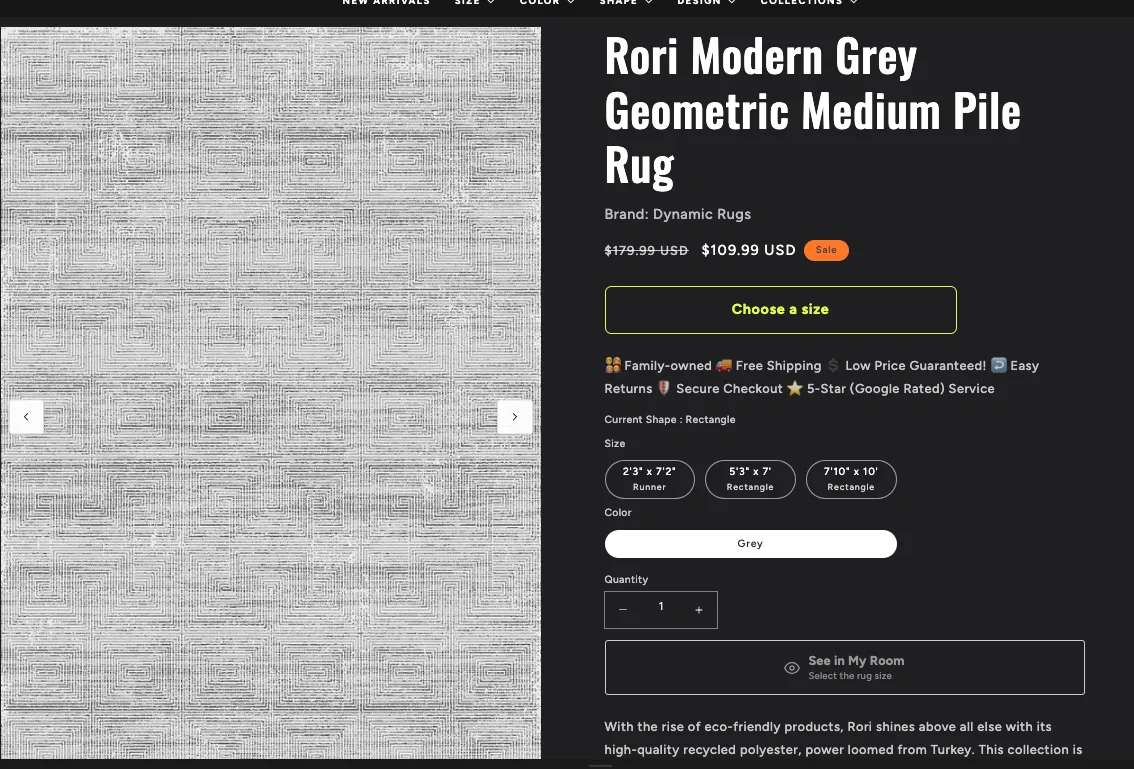
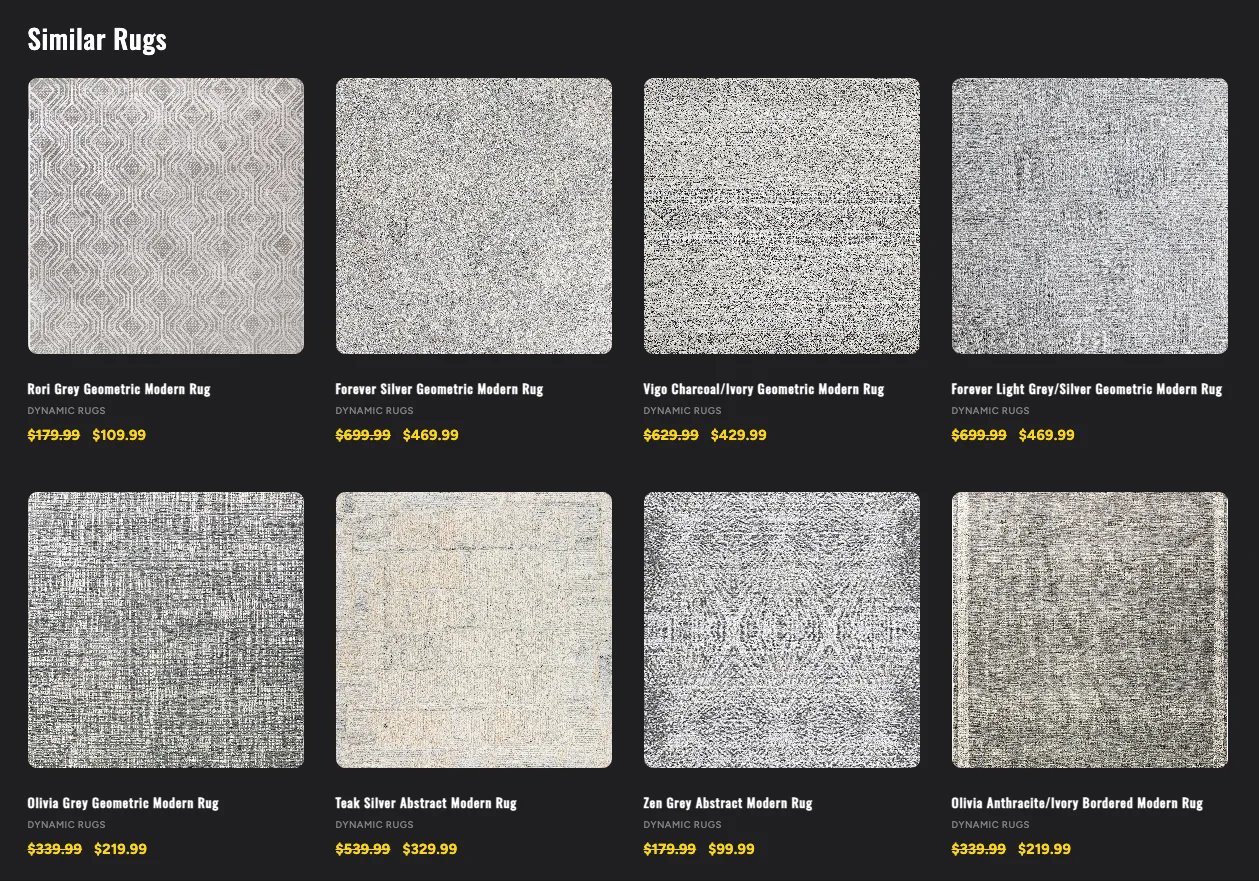
Visually and contextually similar products for shoppers who like the current item but want alternatives.
Options that preserve important size, shape, material, finish, or availability requirements.
Related color direction, form, pattern, texture, material, or design feel without simply duplicating the current product.
Useful alternatives based on the product, catalog relationships, popularity, and observed shopper interest.
Search and recommendations are the foundation. Visual and room-based workflows can add guided navigation, style discovery, visualization, and conversational assistance where the catalog and use case support them.
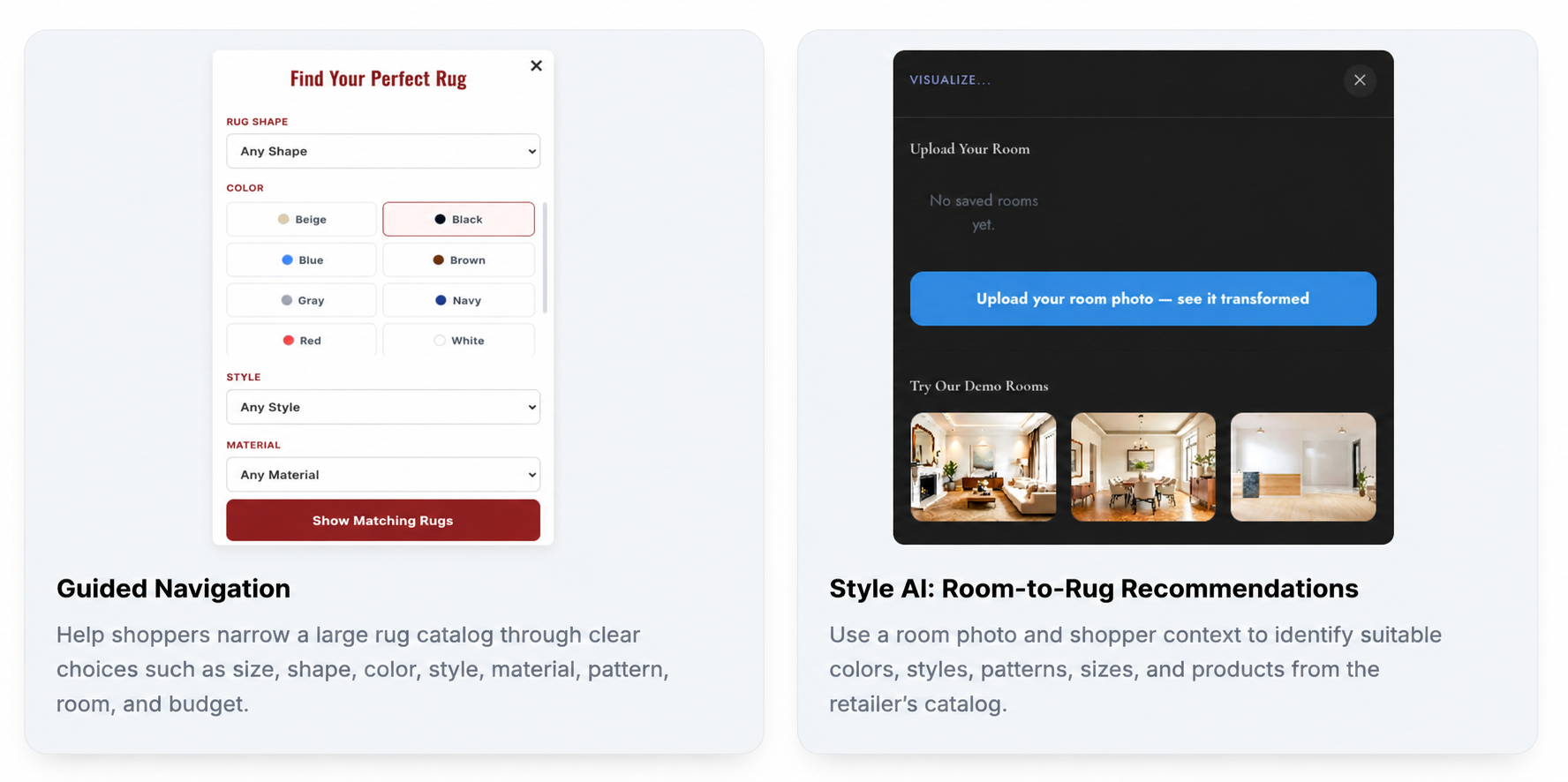
After search, recommendations, or Style AI identifies promising products, visualization can help the shopper evaluate those options in room context.
The shopper uploads a room photo or uses a supported room image.
Show the product in the room so the shopper can judge overall look and fit where supported.
Move from search or recommendations into visualization without restarting the journey.
Greater confidence can lead to an online purchase, inquiry, phone call, or showroom visit.
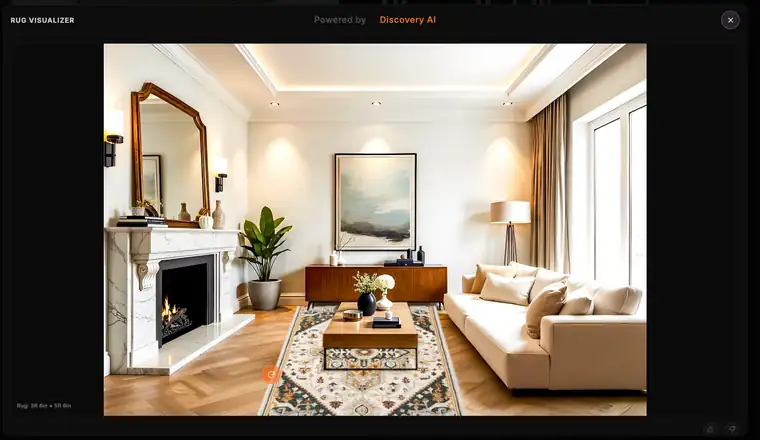
The retailer can use only the capabilities it needs. When combined, they create a more useful path from a broad need to a confident decision.
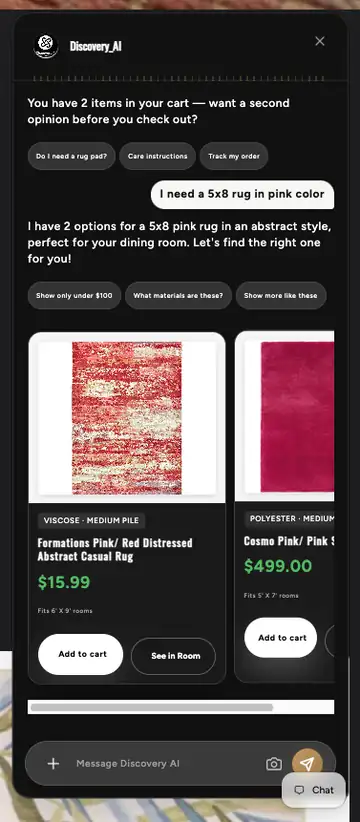
The shopping assistant connects natural-language requests with the catalog, product context, store information, search, recommendations, visual tools, and ecommerce actions.
Understand natural requests and return relevant products with available options, prices, details, and supported shopping actions.
Help with care, materials, availability, services, store hours, directions, returns, and other common needs.
Move shoppers toward a purchase, inquiry, call, showroom visit, or transfer the conversation to store staff when personal help is needed.
Choose the capabilities that fit the retailer’s catalog, customer needs, and growth priorities.